
Imagine a third grader who has trouble sitting still, blurts out answers, and struggles to finish his assignments. By lunchtime, his teacher has had enough. His consequence? No recess.
Here’s the problem: The very thing being taken away might be exactly what this child needs to have a better afternoon.
As a Tampa psychologist who works with children with ADHD, anxiety, learning challenges, and behavioral difficulties, I think it’s important to distinguish between teaching appropriate behavior and taking away opportunities that help children develop the skills they’re struggling with.
And that’s where recess comes in.
More Than Just Playtime
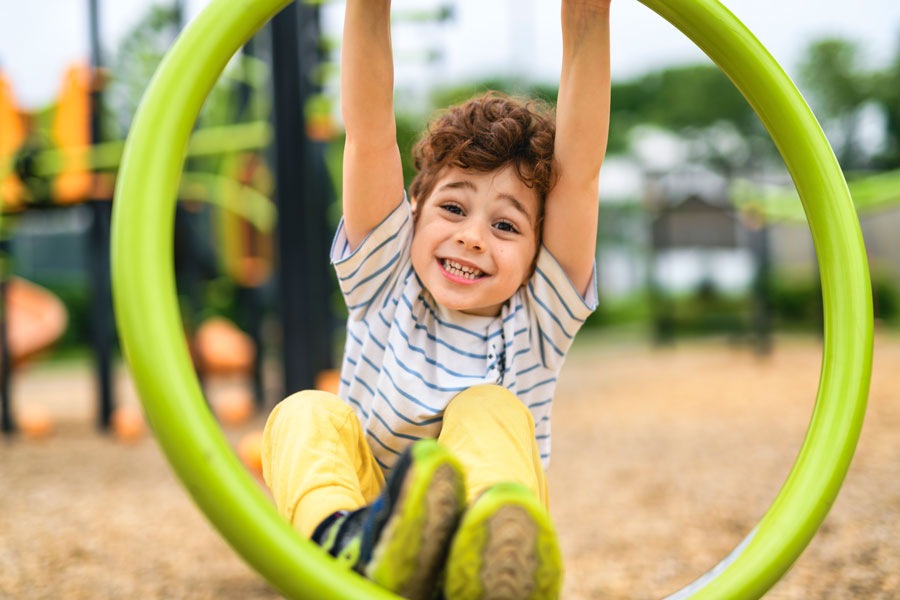
I still remember recess at Baker Hill Elementary School in Great Neck, New York. I remember learning to make my way across the monkey bars, waiting my turn, and feeling pretty proud when I finally got the hang of it. I remember playing box ball with my friends. Mostly, I remember how much I enjoyed recess.
Looking back through the lens of a psychologist, I realize how much learning was happening during those ordinary moments. We were developing confidence, practicing patience, navigating friendships, and figuring things out for ourselves.
And we didn’t even know we were learning!
In May 2026, the American Academy of Pediatrics (AAP) released updated recommendations emphasizing the importance of recess for children’s physical, social, emotional, and cognitive development.
The message is important: Recess isn’t simply a reward for getting through the school day. It’s part of healthy childhood development.
What Children Are Really Learning at Recess
Think about what happens on a playground.
Someone changes the rules of a game. Two children want the same swing. A child gets left out. Another finally masters the monkey bars after weeks of trying.
These seemingly small moments help children learn to manage frustration, negotiate disagreements, solve problems, and recover from disappointment. They also experience the satisfaction of mastering something new.
Unlike the classroom, where adults generally determine what happens next, recess gives children opportunities to make their own decisions, make mistakes, and discover what they’re capable of doing.
It also gives their brains a much-needed break. After hours of listening, concentrating, and following directions, children benefit from opportunities to move, relax, and recharge.
Of course, recess isn’t wonderful for every child. For those who struggle socially, feel overwhelmed by noise, or experience bullying, the playground can be stressful. These children may need additional support or quieter options to feel comfortable and included.
And What About Older Kids?
The need for a break doesn’t disappear when children leave elementary school. Middle and high school students face increasing academic demands, social pressures, and expectations. Yet opportunities to decompress often become less frequent.
The AAP recommends protecting age-appropriate breaks throughout 12th grade. Teenagers may not want to play on the monkey bars, but they still benefit from time to move, connect with friends, and recharge.
Why Taking Away Recess Can Backfire
Let’s return to our third grader.
He’s having trouble concentrating, staying in his seat, and completing his work. So we take away his opportunity to move, socialize, and recharge.
Then we expect him to return to class better able to concentrate and control his behavior.
See the problem?
The AAP’s updated recommendations specifically discourage withholding recess for academic or disciplinary reasons.
This doesn’t mean children don’t need consequences or that inappropriate behavior gets a free pass. It means we need to think carefully about what we’re trying to accomplish.
One of my guiding philosophies is that the purpose of discipline is to raise a self-disciplined adult.
If a child struggles with self-control, our goal is to help them develop that skill. Taking away something that supports their ability to regulate themselves may work against that goal.
Discipline is most effective when it teaches children what to do differently next time.
What Can Parents Do?
Ask about recess. Find out what your child played, who they spent time with, and how things went. You may learn quite a bit about their friendships and emotional well-being.
Make room for downtime. Between school, homework, sports, and activities, children often have little time that belongs entirely to them. Unstructured play encourages independence and creativity.
Pay attention when recess becomes a problem. If your child regularly loses recess or comes home upset about playground experiences, talk with their teacher about what’s happening and how to help.
Sometimes the Best Learning Happens Outside the Classroom
When I think back to those afternoons on the playground at Baker Hill in the 1970s, I don’t remember anyone teaching us about emotional regulation, resilience, or problem-solving. I’m not even sure those words had made their way into the educational vocabulary yet!
We were just kids, playing.
But that’s precisely the point.
Some of life’s most important skills develop when children have opportunities to explore, negotiate, make mistakes, and try again.
Sometimes the best thing we can do to help children learn, behave, and get along with others is to give them a little time to just be kids.
At Rice Psychology Group, we help children and families navigate challenges involving attention, anxiety, learning, behavior, and friendships. If you’re concerned about your child’s development, reach out to schedule a complimentary 10-minute consultation.
Research source: American Academy of Pediatrics (2026), The Crucial Role of Recess in School: Policy Statement. https://doi.org/10.1542/peds.2026-077025