
I have been walking around my neighborhood and cannot believe some of the decorations I am seeing. Two doors down there’s something that looks like a cross between a werewolf and Chewbacca that looks to be about 12 feet high and lights up. In the other direction there’s an eyeball about three times the size of a yoga ball, skeletons, Ghosts with light up eyeballs and a whole host of other lifelike decorations including spiders and skulls and bats.
Now my dogs are a bit taken aback with some of them and I can’t help but put myself in the shoes of a small child and wonder how they are handling driving or walking or riding their bikes around my neighborhood. And I know where I live is not unique.
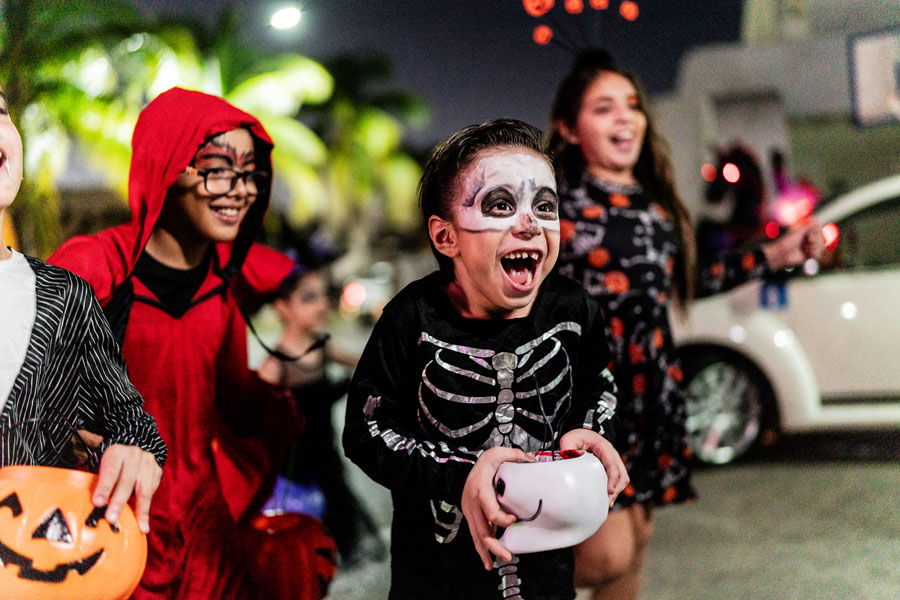
Halloween is not the same as it used to be:
When I was growing up the scariest house was where the homeowner dressed up as a witch to give out candy period now we have giant skeletons animatronic monsters and extremely realistic costumes. I do not recall being frightened driving around my neighborhood and now I know some kids are. I also know that some kids absolutely love this stuff and get excited rather than scared. It’s so interesting how one child might beg to visit the scariest house on the block to see what good candy they are giving out while other kids might not even want to leave your house let alone walk by the scary house.
Some people love being scared while others…I’m one of the others!
So here’s a new concept that I discovered while writing this blog, there’s something called recreational fear and it is defined by the National Institutes of Health as“the voluntary act of seeking out frightening situations for entertainment fun or curiosity while knowing you’re safe.”
So here’s the interesting part, When we feel fear it signals our bodies to run away. But recreational fear turns this on its head and while your body still responds by feeling stressed like your heart beats faster and you get an adrenaline rush your brain knows that you are not actually in danger and that you’re in a safe place.
And some people like it because it gives them a sense of accomplishment or even relief when they survive something scary. Going through something scary with friends or family is a way of releasing tension and actually can be a bonding experience. You can think of it a little bit like how some kids love the thrill of a roller coaster and other kids are terrified by it.
It might be helpful to keep in mind that Enjoying scary things isn’t necessarily a sign of being brave and avoiding them isn’t necessarily a sign of weakness because it can be related to your temperament and whether you are a person who seeks out intense sensations or not and maybe your general level of anxiety in your day to day life.
Why Some children find Halloween genuinely frightening
As you know, kids go through different developmental stages and this can impact how they experience the same events. Young children are just developing an understanding that fantasy and reality are not the same thing. And believe it or not a child can know intellectually that something is pretend or fake but still have a gigantic fear response to it. Knowing and feeling are not necessarily the same thing. Also, we know lots of kids have sensory sensitivities to loud noises and flashing lights and those kids are apt to be more easily frightened or previous experiences with things that are scary and a child’s inborn temperament can help determine how they handle Halloween. A good example of this is perhaps your neighbor put a giant spider on the tree and it’s furry and maybe it’s eyes light up red when someone walks by. Your child might understand that it is fake but they still might not want to walk by your neighbor’s house.
Halloween fears at different ages
Preschoolers ages 3 to 5
For these kids, fantasy and reality can overlap. Masks, monsters and unexpected or sudden movements may undo some kids. At this age it’s best to focus on playful and predictable Halloween experiences.
Grades K-3 (ages 6-9)
Children in early elementary school bar getting better at understanding what is pretend but they still have extremely vivid imaginations which can blur the lines for them. It’s important to remember that curiosity and fear can exist side by side. They often benefit when we explain how decorations work and for them to explore from a comfortable distance.
Tweens (ages 10-12)
For some at this stage, the social pressure to participate in Halloween is front and center. Some tweens may want to watch scary movies or It’s helpful to support them in recognizing and communicating their own interests and limits around Halloween. As a tween I did not want to do any of those things, I just wanted to trick or treat and go through my candy!
How parents can help kids who feel anxious around Halloween
- Prepare don’t surprise. Talk about what your kids might see before you leave the house
- Validate without exaggerating. Acknowledge that something can feel scary without communicating that it is dangerous. So rather than saying to your scared child “Don’t be ridiculous, it’s not real.” You could say something like “Yes, that looks very scary but do you see how it’s plugged in? There’s a motor inside that makes it move like that. It’s actually a decoration.”
- Offer choices. Allow kids to approach gradually, observe from a distance or choose a different activity. “Would you rather look at it from over here?” This helps kids regain a sense of control.
- Avoid forcing exposure. Instead of overwhelming a child and insisting they go near something scary, be supportive and offer them gradual opportunities to build their confidence.
Halloween doesn’t have to be scary to be fun
Remember: Children have different temperaments, developmental needs and tolerance for scary things. We can celebrate Halloween without slasher films and being scared out of your skin at a haunted house!
Parents can gradually help kids gain confidence without pressuring them to experience of enjoy the scary stuff if that’s not their thing.
Finally, remember – raising resilient children isn’t about teaching them to love being scared or never being frightened. It’s about helping them learn that they can manage uncomfortable feelings, so their fear doesn’t control their lives.