
“I don’t know what’s happened to him.”
Melissa looked exhausted.
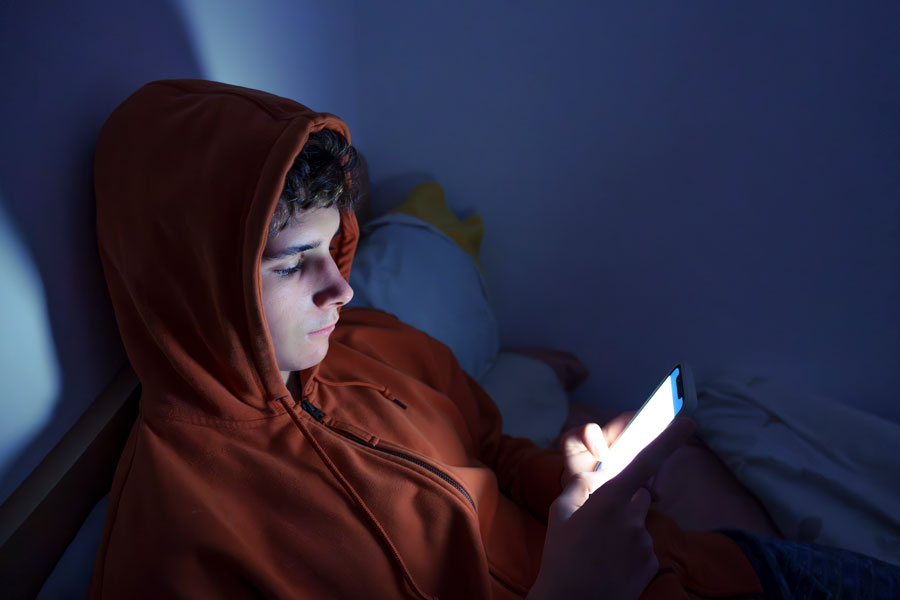
“My son used to come home from school and head outside. Now he goes straight to his room. If I ask him to put his phone away, it’s like I’ve ruined his life. Homework takes forever because he’s constantly checking messages. He isn’t sleeping well. He’s more anxious than he used to be. And honestly…” she paused, “…our family doesn’t really talk anymore.”
If you’re a parent, that story may sound familiar.
Over the past decade, we’ve heard increasing concerns about children and adolescents spending more time on screens. Now, a new Advisory from the U.S. Department of Health and Human Services warns that harmful screen use has become an important public health concern for children and adolescents. The report suggests that the conversation needs to move beyond simply counting hours of screen time and toward understanding how children are using screens, what they are viewing, and what screens may be replacing in their daily lives. (NCBI)
It Isn’t Just About the Number of Hours
One of the most important messages from the Advisory is that not all screen use is the same.
Video chatting with grandparents, researching a school project, or creating digital artwork is very different from hours spent scrolling endless feeds designed to keep children engaged for as long as possible.
Many platforms intentionally use features such as infinite scrolling, autoplay, streaks, notifications, and algorithm-driven content to encourage continued use. Young brains, whose self-regulation systems are still developing, are particularly vulnerable to these design features. (NCBI)
What Concerns Mental Health Professionals?
As Tampa therapists and psychologists, we’re less interested in whether a child spent three hours or four hours on a device than we are in what happened because of that screen use.
The Advisory highlights several areas where excessive or harmful screen use has been associated with poorer outcomes, including:
- Reduced sleep quality
- Increased anxiety and depression
- More attention and behavioral difficulties
- Lower academic performance
- Less physical activity
- Fewer opportunities for face-to-face social interaction
- Delays in language and social-emotional development in younger children when screen exposure begins very early (NCBI)
Importantly, these are associations. Every child is different, and screens are rarely the only factor contributing to emotional or behavioral concerns. Genetics, temperament, family stress, learning differences, friendships, and mental health all play important roles.
What Screens May Be Replacing
This is the question I often encourage parents to consider.
If your child spends three hours on a device today, what didn’t happen?
Maybe they didn’t:
- ride their bike
- read a book
- build something
- practice a sport
- play imaginatively
- talk with family
- get enough sleep
- experience boredom long enough to become creative
Healthy child development depends on thousands of small experiences that help build attention, emotional regulation, language, problem-solving, resilience, and relationships. Screens aren’t necessarily harmful because they exist. They become problematic when they consistently crowd out these important developmental experiences.
Warning Signs Worth Paying Attention To
The Advisory also describes behaviors that may suggest screen use is becoming unhealthy, including:
- Becoming extremely upset when devices are taken away
- Constantly thinking about or requesting screen time
- Withdrawing from previously enjoyed activities
- Hiding online behavior
- Repeatedly trying—and struggling—to cut back on screen use
- Using screens primarily to escape uncomfortable emotions (NCBI)
These signs don’t automatically mean a child has an addiction or a mental health disorder. They are simply indicators that it may be time to take a closer look.
What Parents Can Do
The good news is that parents don’t have to eliminate technology to protect their children.
Instead, think about creating a healthier relationship with screens.
Some ideas include:
- Keep bedrooms screen-free at night.
- Protect sleep by putting devices away well before bedtime.
- Create regular screen-free family times, such as meals.
- Encourage activities that naturally compete with screens, including sports, music, outdoor play, reading, and hobbies.
- Delay introducing personal devices when possible.
- Stay curious about what your child is watching, playing, and experiencing online instead of focusing only on time limits.
- Model healthy screen habits yourself. Children notice far more than we realize. (Health.gov)
Final Thoughts
Technology isn’t going away, nor should it.
Our goal isn’t to raise children who fear technology. It’s to raise children whose lives are rich enough that screens become one meaningful part of their day rather than the center of it.
If you’ve noticed increasing anxiety, irritability, attention difficulties, sleep problems, or family conflict around technology, it may be worth looking beyond the screen itself and asking what your child needs more of—not just what they need less of.
Sometimes small changes in routines can make a meaningful difference. And sometimes persistent concerns about attention, anxiety, mood, learning, or emotional regulation deserve a more comprehensive evaluation with the Rice Psychology team. If you’re wondering whether what you’re seeing is typical or whether your child may benefit from professional support, we’re here to help.